


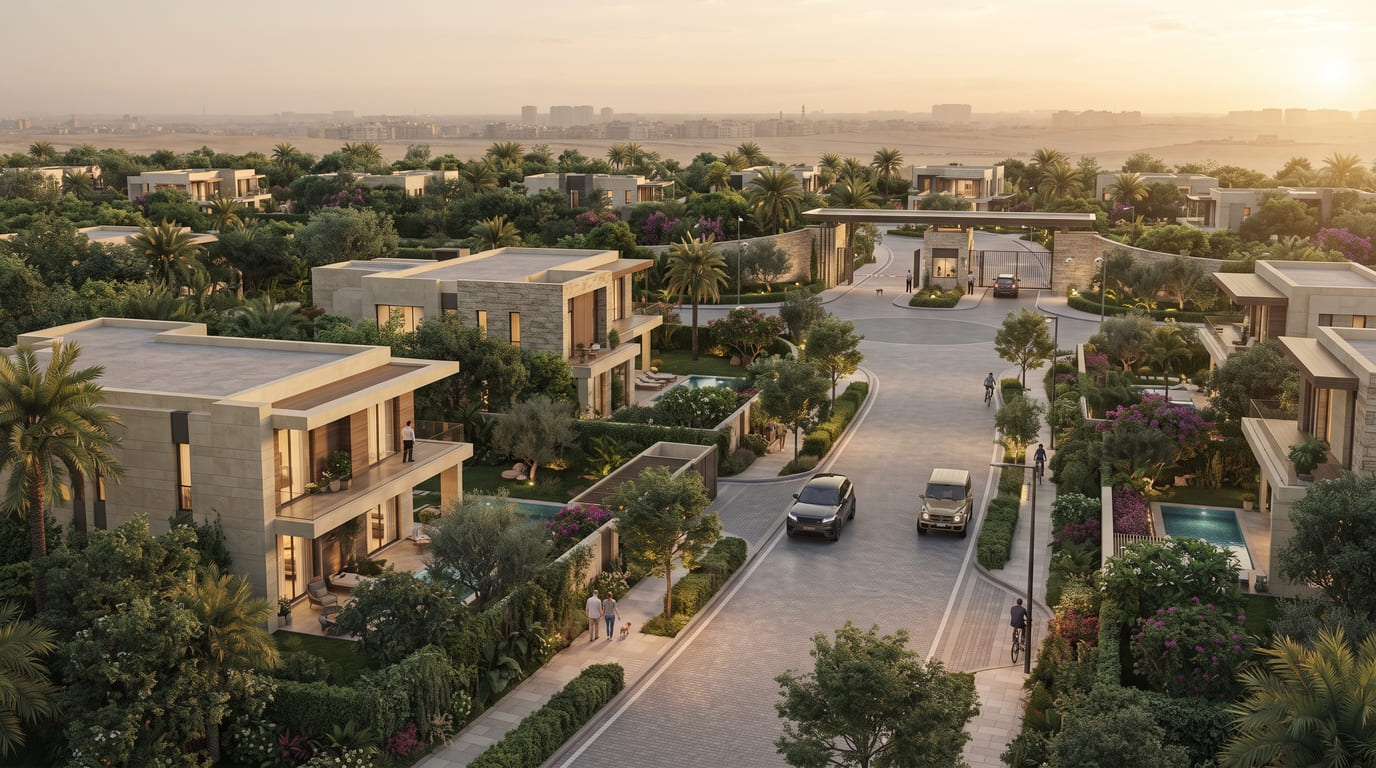
Modern security isn’t just about gates and guards. It starts with the way a community is planned. As West Cairo continues to expand, New Zayed compounds are placing greater emphasis on layouts that naturally limit exposure, control movement, and create clearer boundaries between private homes and shared spaces.
These choices can shape everyday privacy just as much as security infrastructure does. They also show why evaluating a compound requires looking beyond its list of security features.
In New Zayed, the relationship between access control, residential design, traffic flow, landscaping, and shared spaces can determine how private and secure a community feels long after residents pass through the entrance.
How Gated Access Creates a More Controlled Environment
One defining characteristic of a gated compound is the ability to control movement between the surrounding area and the residential community.
Clearly defined entrances can help manage:
- Resident and visitor access
- Vehicle movement
- Security monitoring
- Access to private residential areas
- Unnecessary through-traffic
This creates a different environment from an open residential neighborhood, where roads and entrances are generally accessible to a much wider range of people.
However, a gate by itself does not create a secure community. Its effectiveness depends on how access is managed, how security personnel operate, and whether internal areas are appropriately monitored.
How Compound Design Can Improve Privacy
A compound’s layout can influence privacy as much as its access controls. The distance between homes, the orientation of buildings, and the way residential areas relate to roads and shared spaces can all affect how much residents are exposed to their surroundings in everyday life.
Several elements can contribute to greater privacy:
- Greater separation between homes
- Thoughtful building orientation
- Landscaping between residential areas
- Private gardens and outdoor spaces
- Careful positioning of windows and entrances
- Clear separation between private and communal areas
These details can reduce direct visual exposure and create a stronger distinction between a resident’s private space and the wider community.
Security Goes Beyond the Main Gate
A well-designed security system extends throughout the community rather than stopping at the entrance.
Important elements can include:
- Surveillance: CCTV can support monitoring around entrances and relevant shared areas.
- Lighting: Properly illuminated roads, pathways, entrances, and communal spaces improve visibility and can contribute to a stronger sense of security.
- Security personnel: Guards and patrols provide an active layer of oversight, particularly around access points and other key areas.
- Internal circulation: Roads and pedestrian routes should be organized so that movement through residential areas remains predictable and manageable.
- Maintenance: Poor lighting, neglected pathways, and poorly maintained shared areas can make a community feel less secure, regardless of the security measures in place.
Why Internal Traffic Matters for Privacy and Safety
Traffic affects more than how easily residents move around a compound. It can also influence noise levels, privacy, and how comfortable shared spaces feel. When access is controlled and unnecessary through-traffic is limited, residential streets are used primarily by residents and their visitors rather than by vehicles passing through the area.
The layout of internal roads matters as well. Clearly defined routes for vehicles and pedestrians can reduce unnecessary interaction between the two, while keeping residential areas more removed from busy external roads.
For families, this can mean quieter surroundings, less disruption, and a greater sense of separation from the activity outside the compound.
How TBK Developments Approaches Privacy and Safety in New Zayed
At TBK Developments, privacy and safety are treated as integral parts of the residential experience, shaping how communities are planned, organized, and experienced.
Key of Greens: A Villa Community Designed Around Privacy
Key of Greens brings this approach into a villa-focused residential setting, with private homes, landscaped areas, internal pathways, and shared community spaces planned within a defined residential environment. The layout creates a clear distinction between private residences and communal areas, while keeping everyday amenities within the community.
This combination allows residents to maintain a greater sense of separation and privacy without giving up the convenience of shared spaces and community living. It reflects a broader approach to residential planning in which the layout of the community contributes to the way residents experience their surroundings.
Make Key of Greens your new address and enjoy a residential experience shaped around greater privacy, security, and peace of mind. Contact us at 15902 to learn more.