


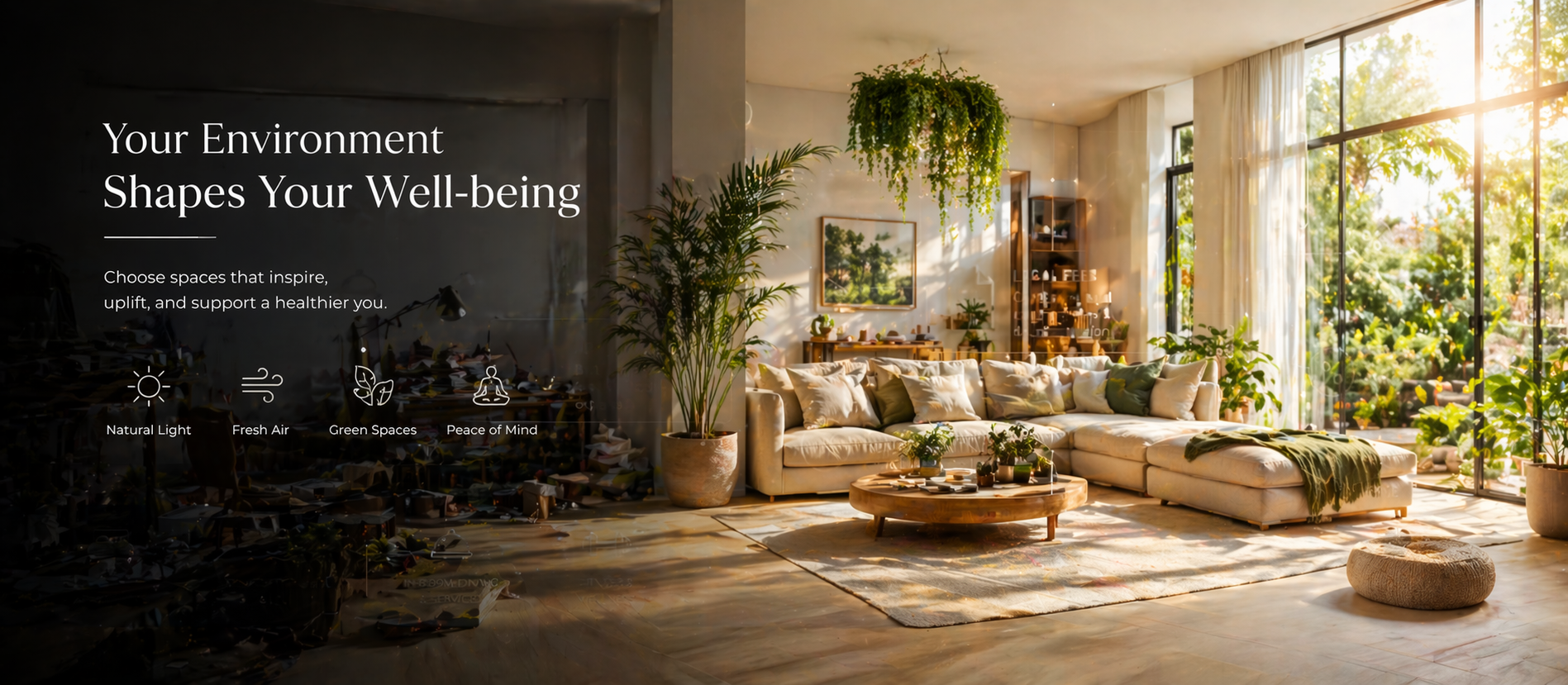
Where you live does more than define your location. It shapes how your day unfolds, how much effort daily tasks require, and how comfortable you feel over time.
Many of these effects go unnoticed because they are built into routine. The time it takes to move around, the level of noise you experience, and how easily you can access what you need all influence your daily experience in subtle but consistent ways.
Over time, these small details accumulate. They can either support a smoother, more balanced lifestyle or create constant pressure that affects how you feel and function every day.
Understanding this connection is key to recognizing why the right living environment is not just a preference, but a long-term factor in overall well-being.
The Overlooked Impact of Your Living Environment
When choosing a home, most decisions are based on what is immediately visible. Size, layout, and location tend to take priority, while how the environment actually functions on a daily basis is often overlooked.
What many don’t consider is how much effort a space requires to live in. The ease of moving through your day, the level of organization around you, and how connected or fragmented your surroundings feel all play a role in shaping your experience.
These are not always obvious at first. They become clearer over time, as small inefficiencies start to accumulate and affect how comfortable and manageable daily life feels.
This is where the real difference lies. A well-designed environment supports your routine without demanding extra effort, while a poorly structured one does the opposite.
How Urban Living Can Affect Your Lifestyle
Urban areas offer convenience and access, but they often come with trade-offs that affect daily living.
High density, constant activity, and traffic can turn simple routines into time-consuming tasks. Moving between places requires more effort, adding pressure to daily schedules and reducing flexibility.
Continuous stimulation also plays a role. Noise, crowded spaces, and limited privacy can make it harder to maintain a sense of calm and consistency.
Continuous stimulation also plays a role. Noise, crowded spaces, and limited privacy can make it harder to maintain a sense of calm and consistency.
What Makes a Living Environment Supportive or Draining
Not all environments influence daily life in the same way. The difference often lies in how much effort is required to move through everyday routines.
A supportive environment works with you. It makes movement easier, keeps essential needs within reach, and offers a level of organization that helps daily life feel smoother and more manageable.
In contrast, a draining environment adds friction. Crowded spaces, limited accessibility, and disorganized surroundings can turn simple tasks into more demanding ones over time.
This distinction changes how a home should be evaluated. It is not only about the space itself, but about how well that space supports the way you live.
How Modern Developments Are Adapting to These Needs
As expectations around living environments evolve, modern developments are shifting their focus from simply providing space to creating environments that support daily life more effectively.
This shift is reflected in several key approaches:
- Lower-density planning: Reducing overcrowding to create more comfortable and less pressured living spaces.
- Integration of green and open areas: Providing room for movement, relaxation, and a better overall atmosphere.
- Better organization of services and access: Ensuring essential needs are within reach without adding complexity to daily routines.
- Community-focused design: Creating environments that balance privacy with shared spaces in a structured way.
These elements reflect a broader move toward developments that are designed not just to house residents, but to improve how they live on a daily basis.
Key of Greens: A Community Designed Around Well-Being
Within this shift toward more supportive living environments, Key of Greens in New Zayed shows how well-being can be built into the foundation of a community, not treated as an added feature.
As a villa-only development, it offers a lower-density layout that creates more space between homes, supporting privacy, calm, and a clearer sense of openness.
This is reinforced through how the community is planned:
- Continuous green surroundings: Landscaping extends across the project to create a more balanced and less congested environment.
- Better light and airflow: The spacing and positioning of villas allow natural elements to move more freely throughout the community.
- Organized movement within the community: Clear pathways and structured layout make daily navigation easier and more efficient.
- Spaces that support an active routine: Outdoor areas, sports zones, and shared spaces encourage movement and everyday engagement.
Together, these elements create an environment that supports daily life more naturally, aligning with how people want to live today.
Choose a Better Living Environment with TBK Developments
Discover a living environment designed to support comfort, balance, and everyday ease. Through Key of Greens, TBK Developments brings together space, planning, and natural elements to create a community that works with your lifestyle, not against it.
Every detail is shaped to reduce daily pressure and offer a more consistent and comfortable living experience over time.
Contact us at 15902 to explore your options at KOG and secure a home designed around your everyday needs.