


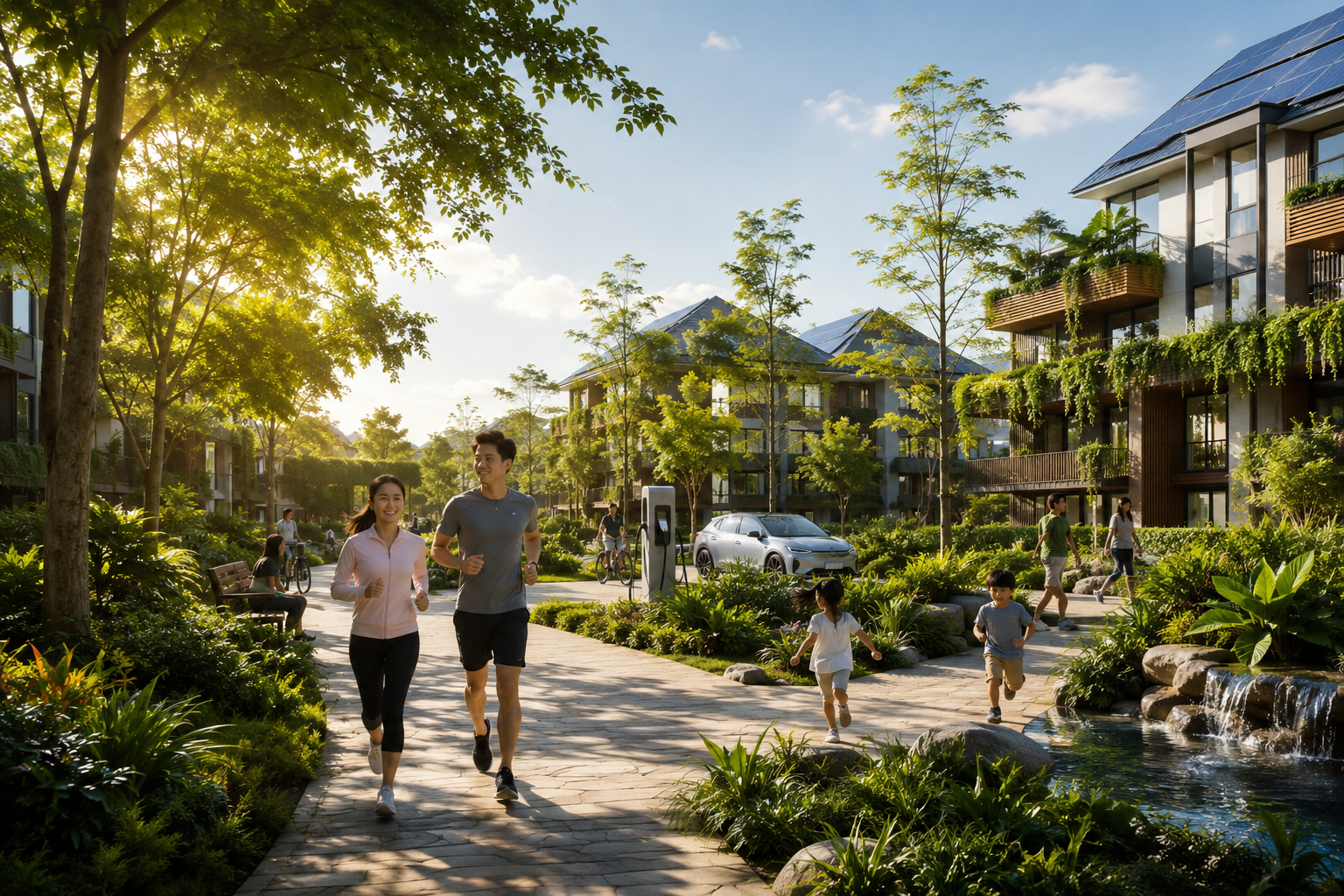
Is your current living environment starting to feel more exhausting than comfortable?
Crowded layouts, limited privacy, and outdoor spaces that rarely translate into real daily use have become common across many residential compounds. What was once marketed as convenience often turns into constant movement, noise, and a lack of breathing space.
This is where the idea of a green community becomes relevant. Not as a trend, but as a response. In this context, it refers to a planned residential compound where space is intentionally distributed, density is controlled, and greenery is part of everyday living.
As expectations shift, more buyers are no longer just choosing where to live. They are choosing how they want to live.
Why Green Communities Are Becoming the Preferred Choice
The shift toward green communities is driven by how these developments are planned.
In many compounds, the layout is built around maximizing units, with open space added afterward. In green communities, the approach is reversed. Space is structured first, then development follows within it.
This results in:
- More efficient land use: Space is not just available, it is organized in a way that supports movement, access, and visibility across the compound.
- Controlled density: The number of units is aligned with the available space, reducing pressure on shared areas and infrastructure.
- Integrated planning: Green areas are part of the layout itself, not separate additions. This creates a more cohesive environment rather than fragmented zones.
- Stronger long-term positioning: As buyer expectations evolve, developments built around space and planning tend to maintain their appeal and relevance over time.
Green communities are becoming the preferred choice because they reflect a different planning logic; one that prioritizes how space is structured, not just how it is filled.
The Shift Toward Green Living in New Urban Areas
This shift reflects a broader change in how buyers evaluate residential compounds.
In the past, many developments prioritized unit count over space quality. Today, that balance is being questioned. Buyers are paying closer attention to how compounds are planned, not just where they are located.
This is why demand is moving toward areas like New Zayed and New Cairo, where there is more flexibility to develop projects with better spacing and layout.
- Buyer expectations are more defined: Decisions are increasingly based on planning, density, and overall structure.
- Preference is moving away from overbuilt compounds: Projects that feel congested are losing appeal compared to those with more balanced layouts.
- Planning is becoming a key differentiator: How a compound is designed now plays a central role in its competitiveness.
Green living is no longer a niche preference. It is becoming a standard expectation in new urban developments.
How Green Communities Improve Daily Living
The impact of planning is reflected in how simple daily actions feel inside the compound.
Movement becomes more direct and predictable, with clearly defined walkways, easier access, and shared spaces placed where they are actually needed.
- Less friction in daily movement: Entering, exiting, and moving within the compound becomes more direct, with fewer interruptions or bottlenecks.
- Outdoor spaces that are actually used: Green areas are placed within reach, making them part of everyday routines rather than separate zones.
- A quieter, more consistent environment: Better spacing reduces overlap between activities, limiting noise and disruption.
- More visual and spatial comfort: Open areas and balanced layouts reduce the sense of crowding.
How Key of Greens in New Zayed Reflects This Shift
This shift toward green living is already influencing how new compounds are planned, particularly in emerging areas like New Zayed. With more flexibility in land use, these locations allow for a different approach to development, one that prioritizes space, layout, and long-term livability.
Within this context, Key of Greens is positioned as an early example of this direction.
Rather than adapting to an existing pattern, it is developed within an area that is still taking shape, allowing its planning approach to align with how buyer expectations are evolving today.
- Planned around space, not just units: The layout reflects a focus on distribution and balance, where built areas and open spaces are structured together rather than separated.
- Integrated greenery as part of the layout: Landscaping is embedded into how residents move and interact within the compound, not added afterward.
- Controlled density and clearer movement: The number of units is aligned with the available space, supporting a more organized and less congested environment.
- A layout designed for long-term relevance:The planning approach aligns with how buyer expectations are evolving toward more balanced living environments.
Explore a Green Community Designed Around Real Living
Discover how a well-planned environment can reshape your daily experience and long-term comfort.
Key of Greens brings this approach into a real setting, where space, layout, and landscape are designed to work together from the start, not added later.
If you’re looking for a residential experience that feels more intentional and better aligned with how you want to live, this is where that shift becomes tangible.
Explore Key of Greens and choose a residential environment designed to support how you live every day.